Introduction
Organic farming is a sustainable agricultural method that focuses on growing crops naturally without the use of synthetic fertilizers, pesticides, or genetically modified organisms (GMOs). In recent years, organic farming in India has gained significant popularity due to increasing awareness about soil health, food safety, and environmental protection.
For farmers, organic farming is not just a method — it is a long-term investment in soil fertility, crop quality, and sustainable income.
🌱 What is Organic Farming?
Instead of chemical inputs, organic farming strengthens the natural ecosystem of the farm.
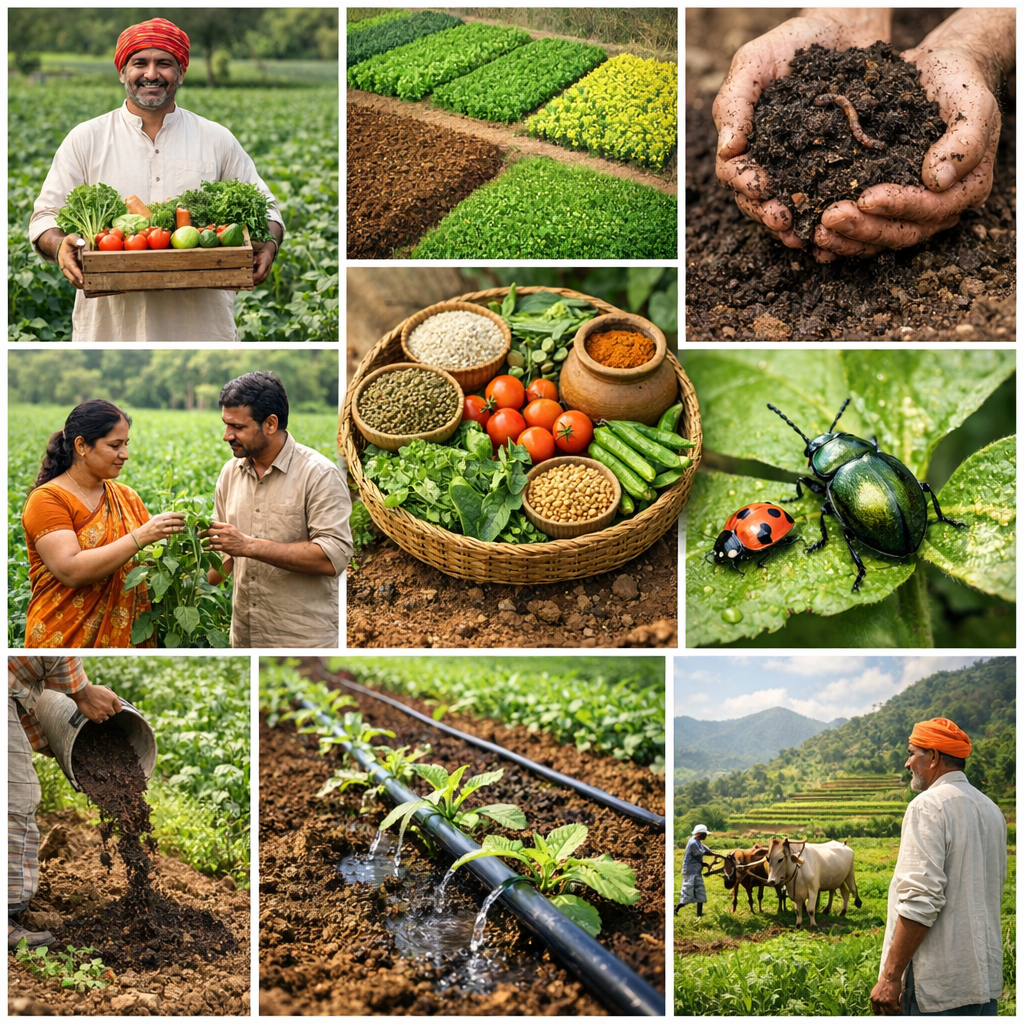
Organic farming is a system of agriculture that relies on:
- Natural fertilizers like compost and manure
- Crop rotation
- Biological pest control
- Organic soil improvement techniques
🌍 Why Organic Farming is Important in 2026
With rising health concerns and climate change issues, organic farming is becoming more important than ever.
Key Reasons:
- Growing demand for chemical-free food
- Decreasing soil fertility due to chemical farming
- Water pollution from synthetic fertilizers
- Government support for sustainable agriculture
- India is now one of the leading countries promoting organic agriculture.
🌾 Benefits of Organic Farming
1️⃣ Improves Soil Health
Organic farming increases soil organic matter and improves microbial activity. Healthy soil produces stronger and more resilient crops.
2️⃣ Higher Market Value
Organic products sell at premium prices compared to conventional produce.
3️⃣ Reduces Input Costs
Over time, farmers reduce dependency on expensive chemical fertilizers and pesticides.
4️⃣ Eco-Friendly Farming
It protects biodiversity, reduces pollution, and conserves water.
5️⃣ Long-Term Sustainability
Organic farming maintains productivity for future generations.
🧪 Methods Used in Organic Farming
🌿 1. Crop Rotation
Growing different crops in different seasons to improve soil nutrients and prevent pests.
🌾 2. Green Manuring
Using plants like sunhemp to enrich soil naturally.
🐛 3. Biological Pest Control
Using natural predators or organic solutions instead of chemicals.
🌱 4. Organic Fertilizers
Using compost, vermicompost, and bio-fertilizers to supply nutrients.
💧 Role of Soil and Water Management
Healthy soil and proper irrigation are essential for successful organic farming.
- Drip irrigation improves water efficiency
- Compost improves soil structure
- Mulching reduces water evaporation
Combining these practices ensures better crop yield and sustainability.
📈 Is Organic Farming Profitable?
Yes, organic farming can be highly profitable when done correctly.
Key factors for profitability:
- Proper certification (if exporting)
- Direct marketing to consumers
- Reducing input costs
- Selecting high-demand crops
Many Indian farmers are successfully shifting to organic agriculture and increasing their income.
🚜 Challenges in Organic Farming
- Initial transition period (2–3 years)
- Lower yield in early stages
- Need for proper knowledge
- Certification process
However, long-term benefits outweigh short-term challenges.
🌿 Future of Organic Farming in India
The future of organic farming looks promising due to:
- Increasing health awareness
- Government support schemes
- Export opportunities
- Growth in organic retail markets
Farmers adopting organic methods today are investing in sustainable success.
Conclusion
Organic farming is not just a trend — it is the future of agriculture. By focusing on soil health, natural inputs, and sustainable practices, farmers can achieve long-term profitability while protecting the environment.
At Sasyam Organics, we believe in supporting farmers with sustainable solutions for healthier crops and better yields.