Introduction
Many farmers today are successfully shifting from chemical-based farming to organic methods and increasing their profits. With rising awareness about soil health and consumer demand for chemical-free food, organic farming is becoming a smart and sustainable choice. Across India, several farmers have transformed their agricultural practices and achieved long-term success.
For farmers, moving towards organic farming is not just a change in method — it is a journey toward better soil, better crops, and better income.
🌱 Why Farmers Are Choosing Organic Farming
Instead of depending on synthetic fertilizers and pesticides, farmers are adopting natural and eco-friendly techniques.
Organic farming focuses on:
- Improving soil fertility naturally
- Reducing harmful chemical usage
- Producing safe and healthy food
- Lowering long-term cultivation costs
- Building sustainable farm ecosystems
🌾 The Journey of Transition
Switching to organic farming requires patience and commitment.
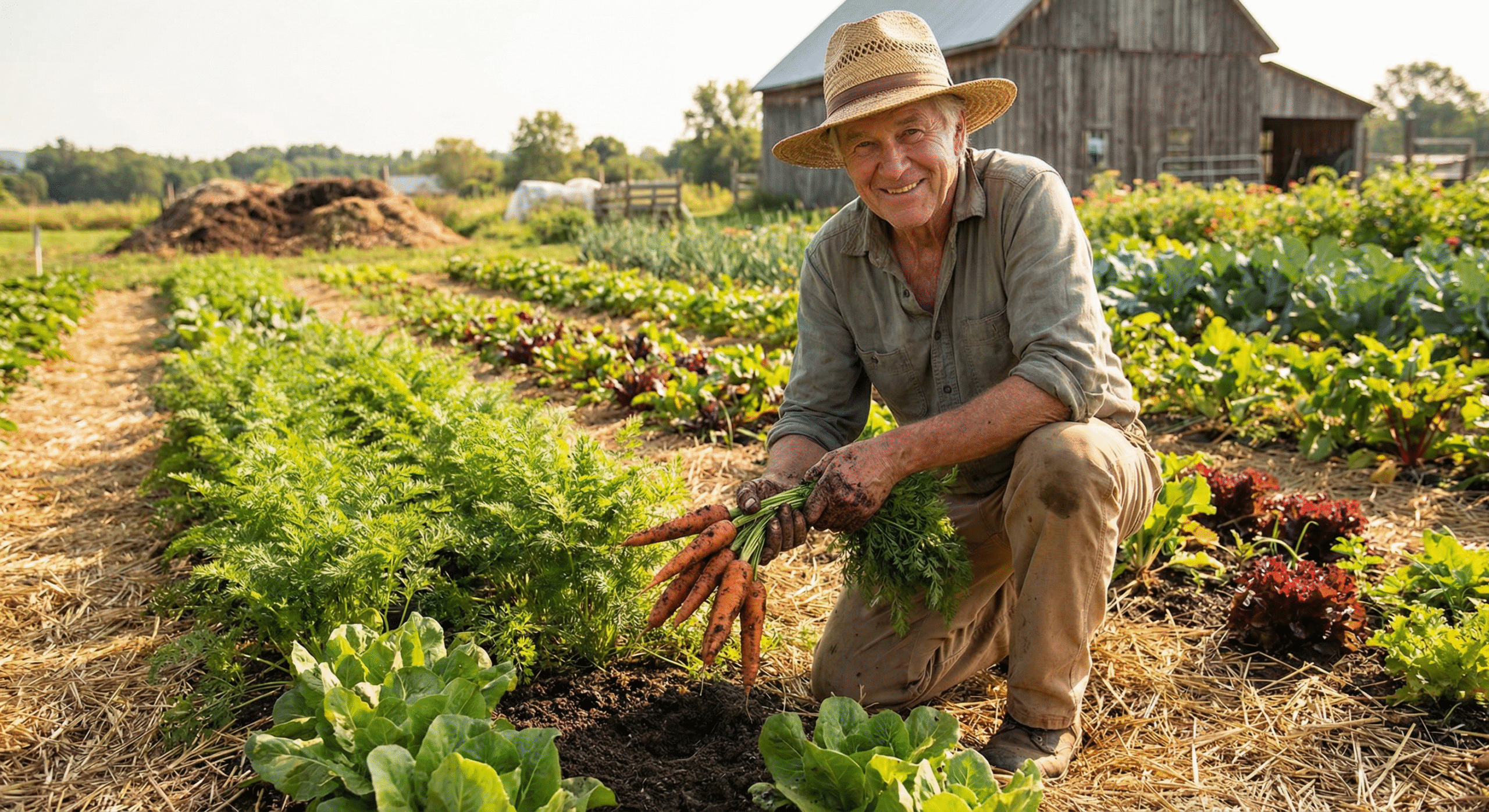
A farmer who practiced chemical farming for many years decided to shift to organic methods. During the first year, the focus was on improving soil health using compost and natural inputs. In the second year, crop rotation and biological pest control were introduced. By the third year, the soil quality improved significantly, and crop productivity stabilized.
Within three years, the farmer noticed visible improvements in soil texture, reduced pest issues, and increased customer demand for organic produce.
🌍 Challenges During the Transition
1️⃣ Initial Yield Reduction
In the early stage, crop yield may slightly decrease as the soil adjusts.
2️⃣ Learning New Techniques
Farmers need proper knowledge of organic practices.
3️⃣ Market Linkage
Finding the right market for organic produce requires planning.
However, persistence and proper guidance help overcome these challenges.
📈 Results Achieved
1️⃣ Reduced Input Cost
Natural fertilizers and compost reduced dependency on expensive chemicals.
2️⃣ Premium Market Price
Organic produce was sold at higher prices in local and urban markets.
3️⃣ Better Crop Quality
Improved soil health resulted in stronger plants and better-quality produce.
4️⃣ Improved Soil Fertility
Increased organic matter enhanced long-term productivity.
5️⃣ Sustainable Income Growth
Consistent demand for organic produce ensured steady profits.
💧 Role of Soil Health in Success
Healthy soil played a key role in this transformation.
- Use of compost improved soil structure
- Crop rotation maintained nutrient balance
- Natural pest control supported biodiversity
- Reduced chemical use restored microbial life
- These practices strengthened the foundation of sustainable farming.
🌿 Why Success Stories Matter
Real-life success stories encourage other farmers to explore organic methods.
They show that:
- Transition is possible with planning
- Long-term benefits outweigh short-term challenges
- Organic farming can be profitable
- Sustainable practices protect future generations
- Such stories build confidence among farming communities.
🚜 Future of Organic Farming Adoption
More farmers are now inspired to shift toward organic practices due to:
- Increasing health awareness
- Government support schemes
- Growing market demand
- Expansion of organic retail chains
- Farmers who adopt sustainable farming today are securing a stable and profitable future.
Conclusion
Success stories of farmers transitioning to organic farming prove that sustainable practices lead to long-term growth and profitability. By focusing on soil health, reducing input costs, and targeting premium markets, farmers can achieve both financial success and environmental protection.
At Sasyam Organics, we believe that every successful farmer’s journey inspires many others to adopt sustainable and profitable agricultural practices.