Introduction
Healthy soil is the foundation of successful farming and sustainable agriculture. It directly influences crop growth, nutrient availability, and overall farm productivity. In recent years, farmers have started realizing that improving soil health is essential for long-term success and environmental balance.
For farmers, soil health is not just about fertility — it is a long-term investment in productivity, crop quality, and sustainable income.
🌱 What is Soil Health?
Soil health refers to the soil’s ability to function as a living ecosystem that supports plants, animals, and microorganisms.
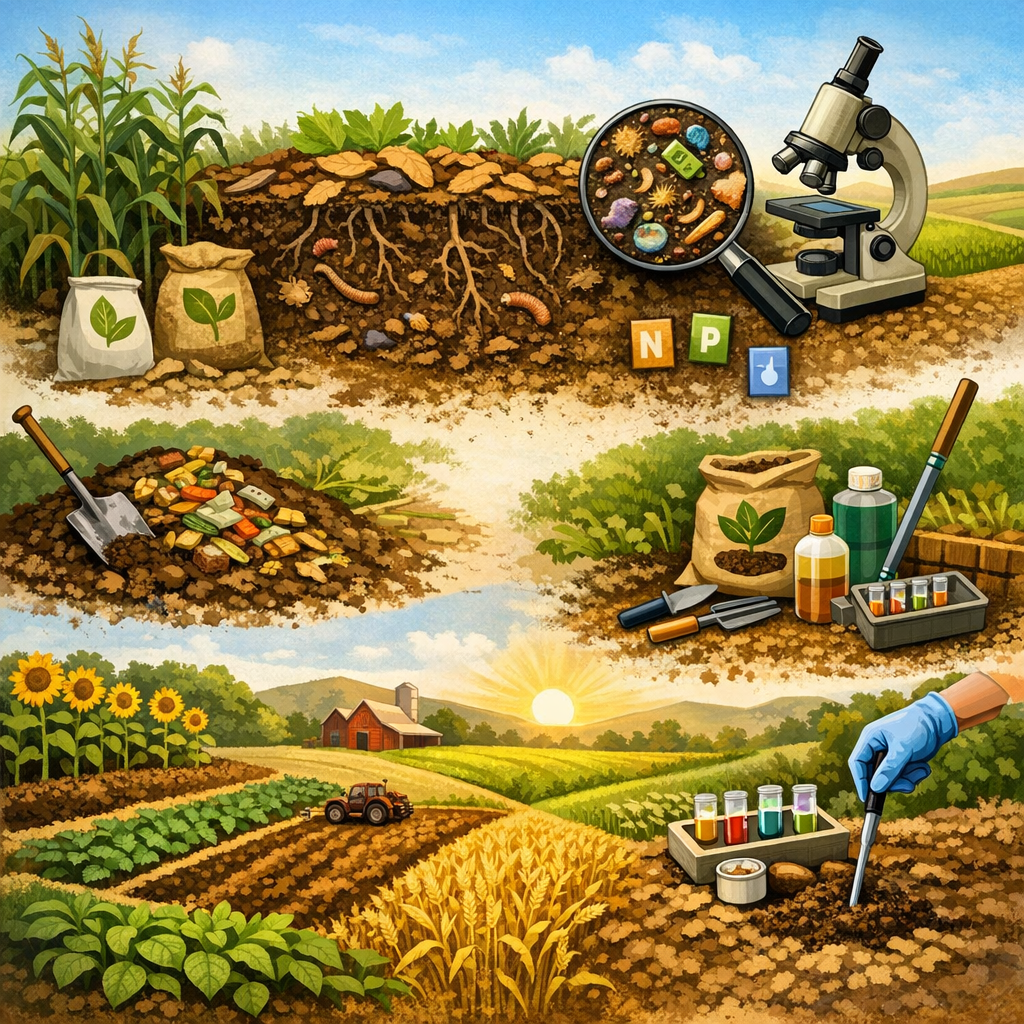
Healthy soil is characterized by:
- Good organic matter content
- Balanced nutrients
- Active microbial life
- Proper soil structure
- Optimal pH level
🌍 Why Soil Health is Important in 2026
With continuous farming and chemical overuse, soil quality is declining in many regions.
Key Reasons:
- Decreasing soil fertility
- Overuse of chemical fertilizers
- Soil erosion problems
- Climate change impact on land
- Need for sustainable crop production
- Maintaining soil health is essential to ensure consistent food production and farm profitability.
🌾 Factors Affecting Soil Health
1️⃣ Organic Matter
Organic matter improves soil structure, water retention, and nutrient availability.
2️⃣ Nutrient Balance
Proper balance of nitrogen, phosphorus, potassium, and micronutrients supports healthy plant growth.
3️⃣ Microbial Activity
Beneficial microorganisms help decompose organic material and improve nutrient cycling.
4️⃣ Proper pH Level
Correct soil pH ensures better nutrient absorption by plants.
5️⃣ Soil Structure
Good soil structure allows proper root development and aeration.
🧪 Methods to Improve Soil Health
🌿 1. Composting
Adding compost enriches soil with organic matter and beneficial microbes.
🌾 2. Crop Rotation
Rotating crops helps maintain nutrient balance and reduce soil-borne diseases.
🐛 3. Organic Fertilizers
Using vermicompost and bio-fertilizers improves soil naturally.
🌱 4. Soil Testing
Regular soil testing helps identify nutrient deficiencies and correct them properly.
💧 Role of Water and Soil Management
Proper irrigation and soil care practices support long-term soil health.
- Drip irrigation prevents waterlogging
- Mulching reduces moisture loss
- Avoiding over-tilling protects soil structure
- Balanced fertilization maintains soil quality
- Combining these practices improves soil productivity and sustainability.
📈 Is Investing in Soil Health Profitable?
Yes, improving soil health leads to better yields and reduced input costs over time.
Key benefits:
- Stronger crop growth
- Reduced fertilizer dependency
- Improved water efficiency
- Higher long-term productivity
- Farmers who focus on soil health often experience consistent and sustainable income.
🚜 Challenges in Maintaining Soil Health
- Lack of awareness
- Overuse of chemicals
- Poor irrigation practices
- Limited access to soil testing
- However, adopting proper soil management practices can overcome these challenges.
🌿 Future of Soil Health Management
The future of farming depends heavily on healthy soil.
- Increasing awareness among farmers
- Government soil health programs
- Growth in organic and sustainable farming
- Advancement in soil testing technologies
- Farmers investing in soil health today are securing better harvests for tomorrow.
Conclusion
Healthy soil is not just the base of farming — it is the key to long-term agricultural success. By focusing on organic matter, nutrient balance, and proper management, farmers can achieve higher yields and sustainable growth.
At Sasyam Organics, we support farmers with sustainable solutions that improve soil health and ensure better productivity for generations to come.