Introduction
Water management is one of the most critical aspects of modern agriculture. Efficient use of water ensures better crop productivity while reducing wastage and operational costs. With changing climate conditions and irregular rainfall patterns, adopting smart irrigation practices has become essential for sustainable farming.
For farmers, proper water management is not just a technique — it is a long-term strategy for higher yield, resource conservation, and stable income.
💧 What is Efficient Water Management?
Instead of traditional flooding methods, modern water management focuses on delivering the right amount of water at the right time.
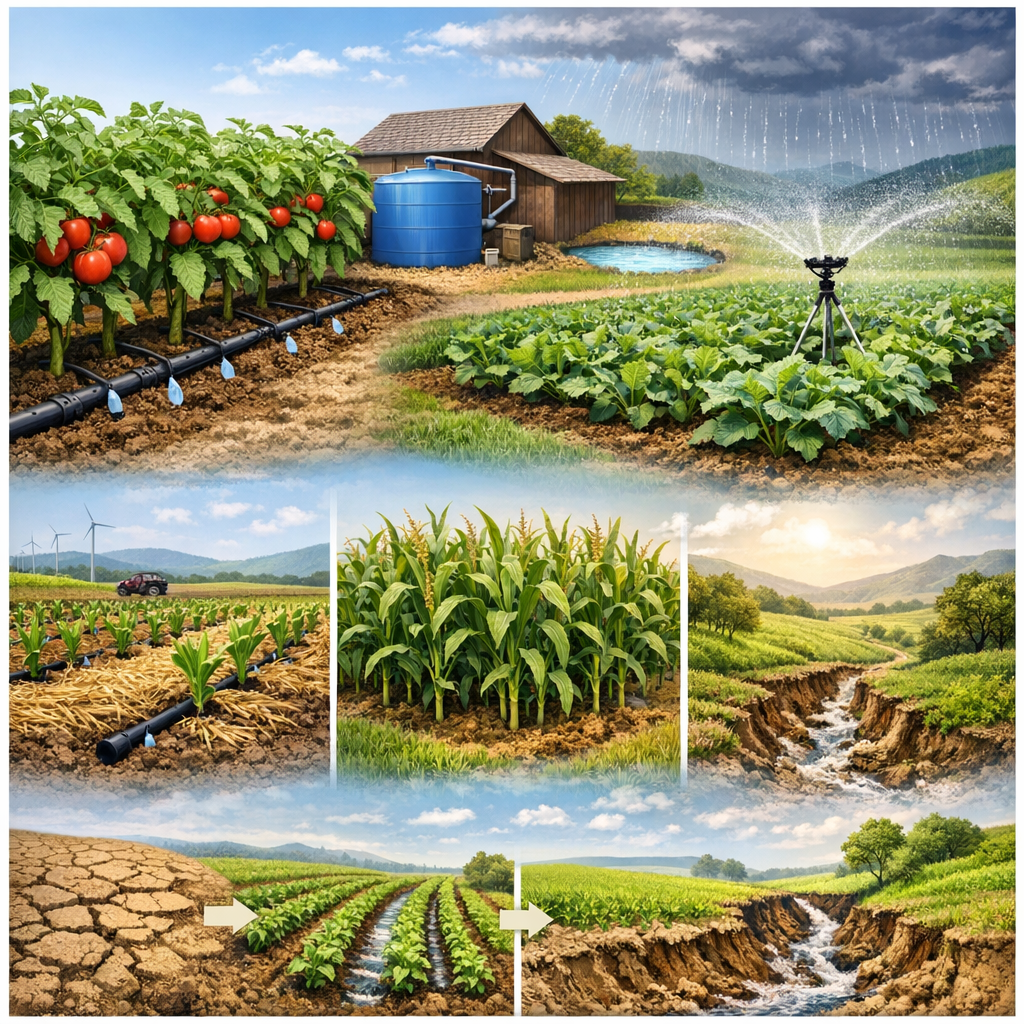
Efficient water management includes:
- Drip irrigation systems
- Sprinkler irrigation systems
- Rainwater harvesting
- Mulching techniques
- Soil moisture monitoring
🌍 Why Water Management is Important in 2026
With increasing water scarcity and climate change impacts, conserving water in agriculture is more important than ever.
Key Reasons:
- Irregular rainfall patterns
- Declining groundwater levels
- Rising irrigation costs
- Need for sustainable farming practices
- Growing food demand with limited water resources
Farmers who adopt efficient irrigation systems today are preparing for a secure agricultural future.
🌾 Benefits of Efficient Water Management
1️⃣ Saves Water
Drip and sprinkler systems reduce water wastage by delivering water directly to plant roots.
2️⃣ Reduces Farming Costs
Lower water usage means reduced electricity and pumping costs.
3️⃣ Improves Crop Growth
Controlled watering enhances nutrient absorption and supports healthy plant development.
4️⃣ Prevents Soil Erosion
Avoiding excess water flow protects topsoil and maintains soil fertility.
5️⃣ Enhances Productivity
Balanced irrigation leads to consistent crop growth and better yields.
🧪 Key Methods of Water Management
💧 1. Drip Irrigation
Delivers water directly to the root zone, minimizing evaporation and runoff.
🌦 2. Sprinkler Systems
Distributes water evenly across the field, suitable for various crop types.
🌧 3. Rainwater Harvesting
Collecting and storing rainwater for future irrigation use.
🌱 4. Mulching
Covering soil with organic materials to reduce evaporation and maintain moisture.
💦 Role of Climate and Smart Irrigation
With climate change affecting rainfall patterns, farmers must adopt intelligent irrigation systems.
- Soil moisture sensors improve water accuracy
- Drip systems increase efficiency
- Mulching conserves moisture
- Combining these methods ensures sustainable and climate-resilient farming.
📈 Is Efficient Irrigation Profitable?
Yes, smart water management can significantly improve farm profitability.
Key factors:
- Reduced water and electricity costs
Improved crop yield - Government subsidies for micro-irrigation
Long-term soil health improvement - Farmers investing in water-saving technologies often see better returns over time.
🚜 Challenges in Water Management
- Initial installation cost
- Need for technical knowledge
- Maintenance of irrigation systems
- Dependence on proper system design
However, long-term benefits outweigh the initial investment.
🌿 Future of Water Management in Agriculture
The future of farming depends on responsible water use.
- Adoption of micro-irrigation systems
- Increased awareness about water conservation
- Government support schemes
- Technology-driven irrigation solutions
Farmers who prioritize water efficiency today are securing sustainable growth for tomorrow.
Conclusion
Efficient water management is not just an option — it is a necessity for modern agriculture. By adopting smart irrigation techniques, farmers can save water, reduce costs, and improve crop productivity while protecting natural resources.
Sustainable water use ensures a better future for farmers, crops, and the environment.